From Broad Aim to a First Small Step
Turn a broad coaching goal into a first small step that reflects the coachee’s priorities and gives the next conversation something observable to discuss.
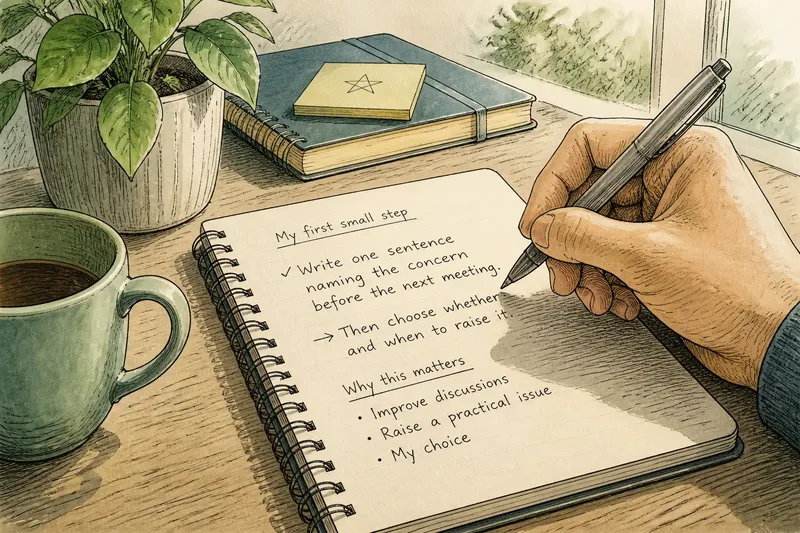
A broad coaching goal becomes workable when the coachee can name an action they choose and could notice themselves taking. Moving from “feel more confident” to a first small step does not shrink the ambition; it gives the conversation a concrete place to begin.
Clarify the aim
Broad aims often arrive as phrases such as “make a change at work” or “get my life in order”. They may carry real meaning, but they do not yet describe what the person wants to do. Ask what the phrase means to this coachee before turning it into a target or task.
Invite them to recall a recent moment that brings the aim into focus. “When did you last notice wanting more confidence?” might lead to a meeting, conversation or decision. Listen for the coachee’s own words and priorities. Wanting to speak up might mean contributing an idea, raising a concern or being heard; those intentions call for different actions.
Reflect the meaning back without refining it into a goal on their behalf. You might say, “It sounds as if you want to share your view before the discussion moves on.” Then ask, “Have I got that right?” Give the person room to amend your wording.
Choose the focus
A coachee may bring several aims: preparing for a difficult conversation, deciding whether to apply for a role and building a steadier routine. Choosing one focus for this conversation does not dismiss the others. It gives attention somewhere useful to land.
Ask which aim feels most relevant now, or what they would most like to leave the conversation with. If they are unsure, explore what feels pressing, meaningful or within their influence. The choice belongs to the coachee, not to the coach’s preference for the neatest task.
Some aims depend partly on another person’s response or an organisation’s decision. Do not imply that the coachee can control those outcomes. Explore what they can choose instead: how to prepare, what to ask or what information to gather. The wider aim can remain important even when the first action concerns only their part.
Describe an action
An action is easier to revisit when it describes something the person could notice themselves doing. “Be more confident” names a desired quality; “write down the point I want to raise before the team meeting” describes an action. The action gives the coachee something concrete to consider, not proof that confidence has changed.
Use questions that invite detail rather than impose a formula:
- Check whether the action names something observable; if it does, ask when or where it might happen, and if it does not, ask what someone could see or hear instead.
- Check whether the action connects to the coachee’s stated priority; if it does, keep exploring it, and if it does not, ask what would make it relevant.
- Check whether the coachee can picture beginning; if they can, ask what they need to make the choice realistic, and if they cannot, explore a smaller move or an unresolved concern.
- Check whether the action depends on another person’s response; if it does, reshape it around the coachee’s own choice, and if it does not, confirm that the person wants to take it.
- Check whether the wording sounds like the coachee’s choice; if it does, invite them to say it in their own words, and if it sounds imposed, ask what they would choose instead.
- Check what the coachee wants to notice afterwards; if they can name something, agree to revisit it, and if they cannot, ask what would be useful to reflect on.
A tidy task can be easy to record but irrelevant to the goal. If the aim is to raise a concern in a meeting, making a decorative folder for notes may not help the coachee speak. Ask what makes the proposed action meaningful to them.
Right-size the move
The first action should feel approachable and still connect to what matters. If it feels daunting, explore a smaller part: draft one sentence, identify the person to speak with or choose a suitable moment. If it feels trivial, ask how it serves the aim. Small describes the action’s scale, not the importance of the goal.
Say a coachee wants to contribute more in planning meetings because they are concerned that a practical issue will be overlooked. They decide to write one sentence naming the concern before the next meeting, then choose whether and when to raise it. The resulting action is something they can observe themselves doing; it does not depend on colleagues agreeing.
If the coachee hesitates, treat that response as information rather than a score to improve. They may need more time, information or a different action. Ask what the hesitation is telling them. The next move may be to clarify the aim rather than press ahead.
Check choice
A practical action can still feel imposed. Listen for phrases such as “I suppose I should” or “That’s what you want me to do”. Do not treat quick agreement as settled commitment. Ask what the person would choose if they were deciding for themselves.
Distinguish an intention from a prediction. The coachee may intend to act without knowing whether circumstances will allow it. Ask what could get in the way and what they would prefer to do then. This makes space for a considered choice without asking them to promise an outcome they cannot control.
When an action touches another person’s privacy, consent or boundaries, keep the coachee’s agency in view without encouraging pressure. A first step might be to prepare a respectful request, not to secure a particular answer. Coaching can help clarify the coachee’s choices; it cannot decide someone else’s response.
Questions about first steps?
How small should the action be?
Choose an action the coachee can describe beginning, while keeping its link to their aim clear. If they cannot picture a start, explore a smaller move or an unresolved concern.
What if the goal changes?
A changed goal can reflect new understanding rather than a failure to follow through. Ask what the coachee has noticed and which priority matters now, then shape an action around that direction.
Should the coach suggest an action?
Start with the coachee’s ideas and ask permission before offering a suggestion. Present it as an option they can accept, adapt or reject, then check whether it fits their priorities.
What should the next conversation revisit?
Ask what the coachee wants to bring back: what they did, what got in the way or what they learned. Treat that information as material for reflection, not as a pass-or-fail result.
Leave room to learn
Before ending, invite the coachee to state the action in their own words and confirm that they want to take it. Ask what, if anything, would make the choice realistic. Keep the agreement plain: what they intend to do, in what context and what they want to reflect on afterwards. Do not add tasks they have not chosen.
When you return to the goal, ask what happened without assuming the action was completed. If it was, explore what the coachee learned and whether the aim still feels right. If it was not, ask what the experience suggests about the action, the circumstances or the priority. A bookmark marks where to return in a book; it does not dictate what the next page must say.
To move from a broad aim to a first small step, keep the coachee’s priority visible, describe an observable action and check that they choose it freely. The first step is a useful point for reflection, while the larger direction remains open to change.